
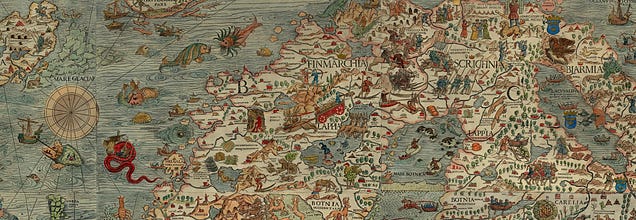

”City of Legions...besides its great wealth above the other cities...the beauty of the meadows and groves, and magnificence of the royal palaces with lofty gilded roofs that adorned it, made it even rival the grandeur of Rome.”
Geoffrey of Monmouth (c. 1135-1139): Historia Regum Britanniae, Book IX. Describing Caerleon, the Court of King Arthur.
The story of King Arthur is one of the most influential and enduring bodies of myths of the Western world. It has influenced political and cultural history in numerous ways from giving medieval British rulers legitimacy to inspiring countless painters, scriptwriters, authors, video game designers and other artists. Who was King Arthur? According to the legends, he was a mighty king of Britain. These legends have many layers: Celtic mythology, Geoffrey of Monmouth’s fantastical Historia Regum Britanniae (c. 1135-1139), and the medieval French romances. For the most familiar form of the legend, we have Sir Thomas Malory to thank. In his book Le Morte d’Arthur (1485), Malory combined, organized and reinterpreted legends from various sources. The result was the story of King Arthur and his knights, all the way from Arthur’s conception until his death in one tome.
According to the legend, King Arthur was conceived by treachery. His father, King Uther Pendragon, desired Igraine, the wife of Duke Gorlois of Cornwall, and sought the help of the wizard Merlin. He was transformed by Merlin’s magic to resemble Igraine’s husband. Deceived by his disguise, Igraine lay with the king at Tintagel. Thus Arthur was conceived. After the death of Uther, Arthur was raised in secrecy by Sir Ector. In his youth, Arthur’s life changed drastically when he pulled the mythical sword Excalibur from the stone. He became king of Britain and ruled from his court in Camelot (or Caerleon, according to Geoffrey of Monmouth), whose splendour rivaled Rome itself. He married the beautiful Guinevere, who brought the Round Table with her as part of her dowry. King Arthur founded the Knights of the Round Table who went on wondrous adventures and conquered much of Europe, including Rome itself. Eventually he was offered the crown of the Western Emperor.
The tale of King Arthur is full of adventure, courtly love, magic and wonder, but it ends in tragedy and betrayal. His close companion Lancelot had an affair with Queen Guinevere. His son Mordred, conceived when Arthur lay unknowingly with his half-sister Morgause, became his undoing. While Arthur was away fighting against Lancelot, he left Mordred in charge of the country. Mordred organized a coup and took the throne for himself. Bloody war broke out with both sides suffering casualties. In the end, only King Arthur and Mordred were left standing on the battlefield. King Arthur slew treacherous Mordred in a brutal duel, but was mortally wounded. He was carried away in a barge with women wearing black hoods, to Avalon to be healed.
This is the legend of the Once and Future King, but what was King Arthur’s Britain like in reality? Was it towering castles and glittering gold, grand tournaments, chivalry and courtly romances, or something entirely different?
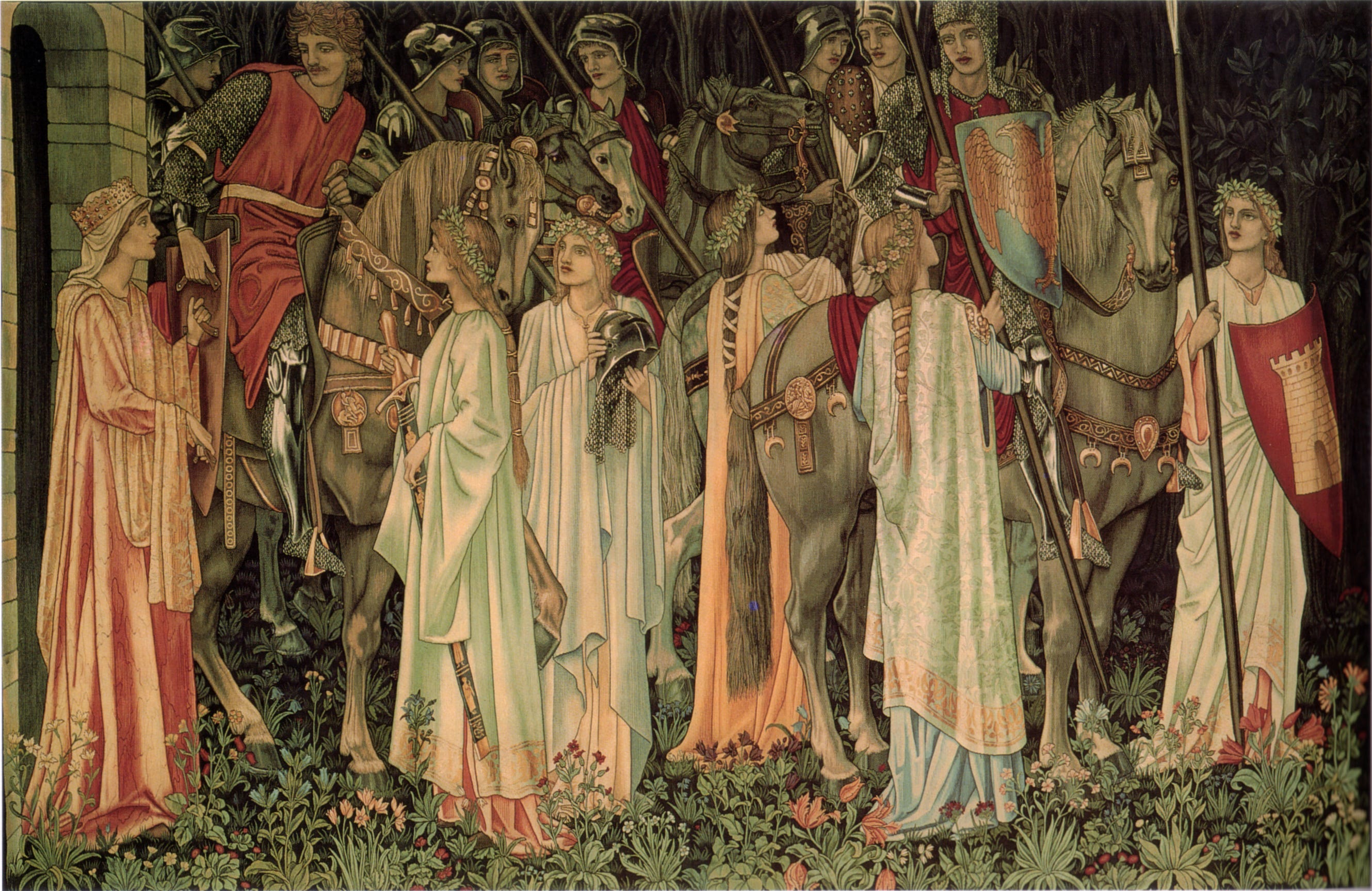
First it must be made clear that nobody has so far been able to prove that King Arthur existed as a historical figure. If he was a real, living and breathing king, he might have lived during a time period known as the Arthurian age. This time period lasted from circa late 5th century to mid 6th century. It has another, less flattering name: the Dark Ages.
From this time period only very few written texts survive until the present day. We know only two British writers from the time period: St. Patrick, the Briton who became a famous Irish saint of the 5th century, and Gildas the Wise, a teacher and deacon who wrote about the history of Britain and shortcomings of his contemporaries in De Excidio Britanniae (’On the Ruin of Britannia’). Gildas paints a bleak picture of the 6th century Britannia fitting the narrative of the Dark Ages. Reality, however, was not so dark after all, as we will soon find out.
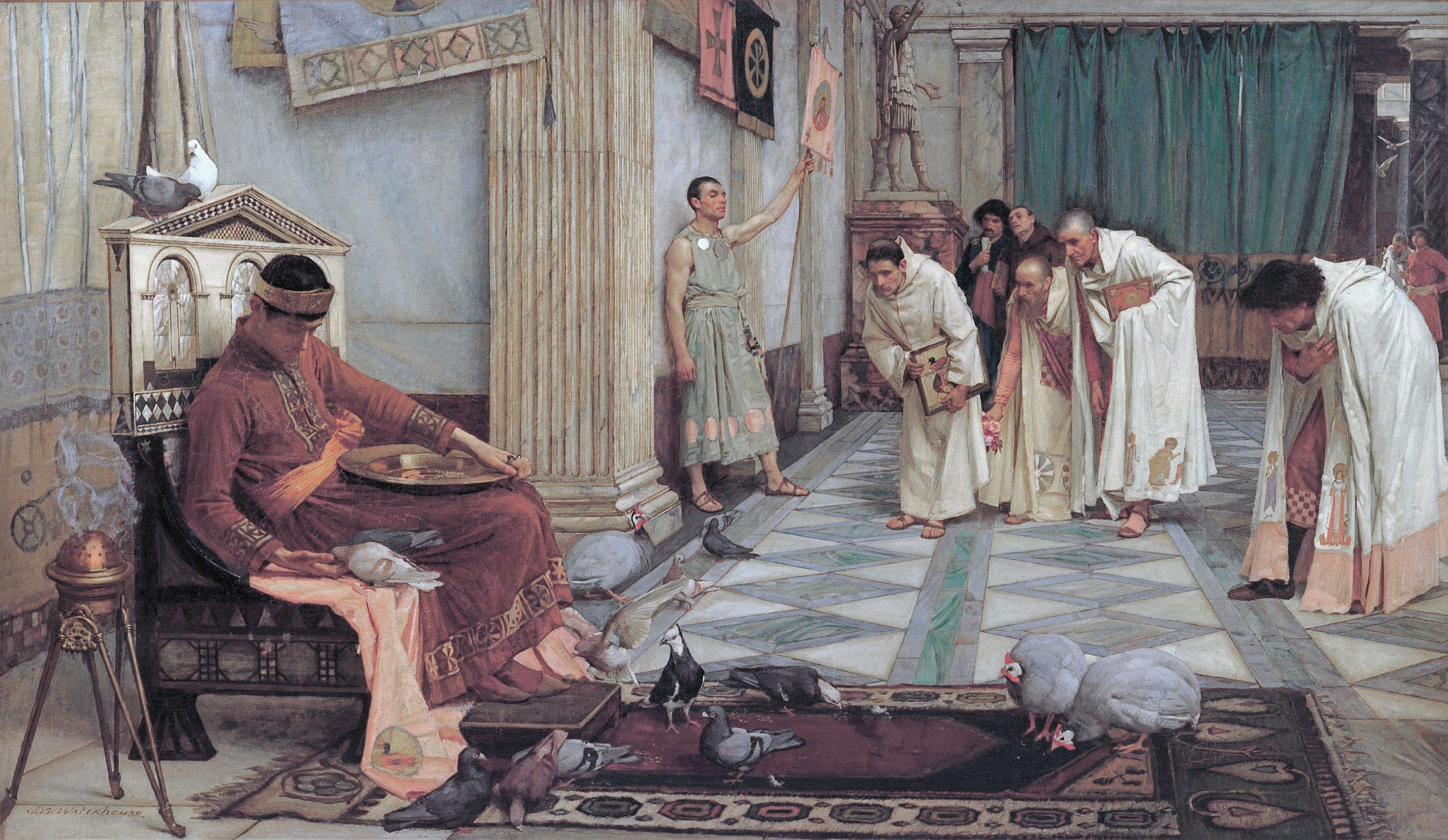
In 410 Emperor Honorius of the Western Roman Empire sent a letter to Britain and urged its towns to take care of their own defenses. This year is often considered as the official end of the Roman rule in Britain, though it has been contested and how long the dissolution lasted is a matter of debate. The beginning of the end had already started earlier. One example of this is related to coinage.
Roman Britain was a relatively poor province of the empire far away from its core. Still, in northern Britain was stationed an unusually large army: in peak years over 40 000 soldiers were stationed there. This was an eighth of the whole imperial army. Maintaining this large force required vast quantities of revenue and goods, such as grain, clothing, weapons and building materials. The army’s needs were met through extensive trade networks connecting the island with the continent. Without the Roman legions, Britain wouldn’t have been able to attract the merchants on such a grand scale. Rome was also a monetary economy. Coins were used for paying compensation to soldiers, paying taxes and in trading. After the Romans left, the whole system collapsed. The flow of coinage dried up earlier and the number of imperial soldiers decreased drastically at the end of the 4th century and beginning of the 5th century due to civil wars and ’barbarian’ attacks. Very few bronze coins arrived after 395 CE, silver coins stopped arriving after 402 CE with one exception, and gold coins followed suit in 408 CE. The last official batch of silver coins was minted by Constantine III in 407-08 CE. After that, nobody minted coins in the British Isles before the Anglo-Saxons in the 7th century. The monetary economy and tax system collapsed. Britain moved on to a barter-based economy. Everyday trade was conducted through barter. Coins minted out of precious metals still left on the island were valued based on their weight. Rulers received their due in farming products, such as grain, and cattle.
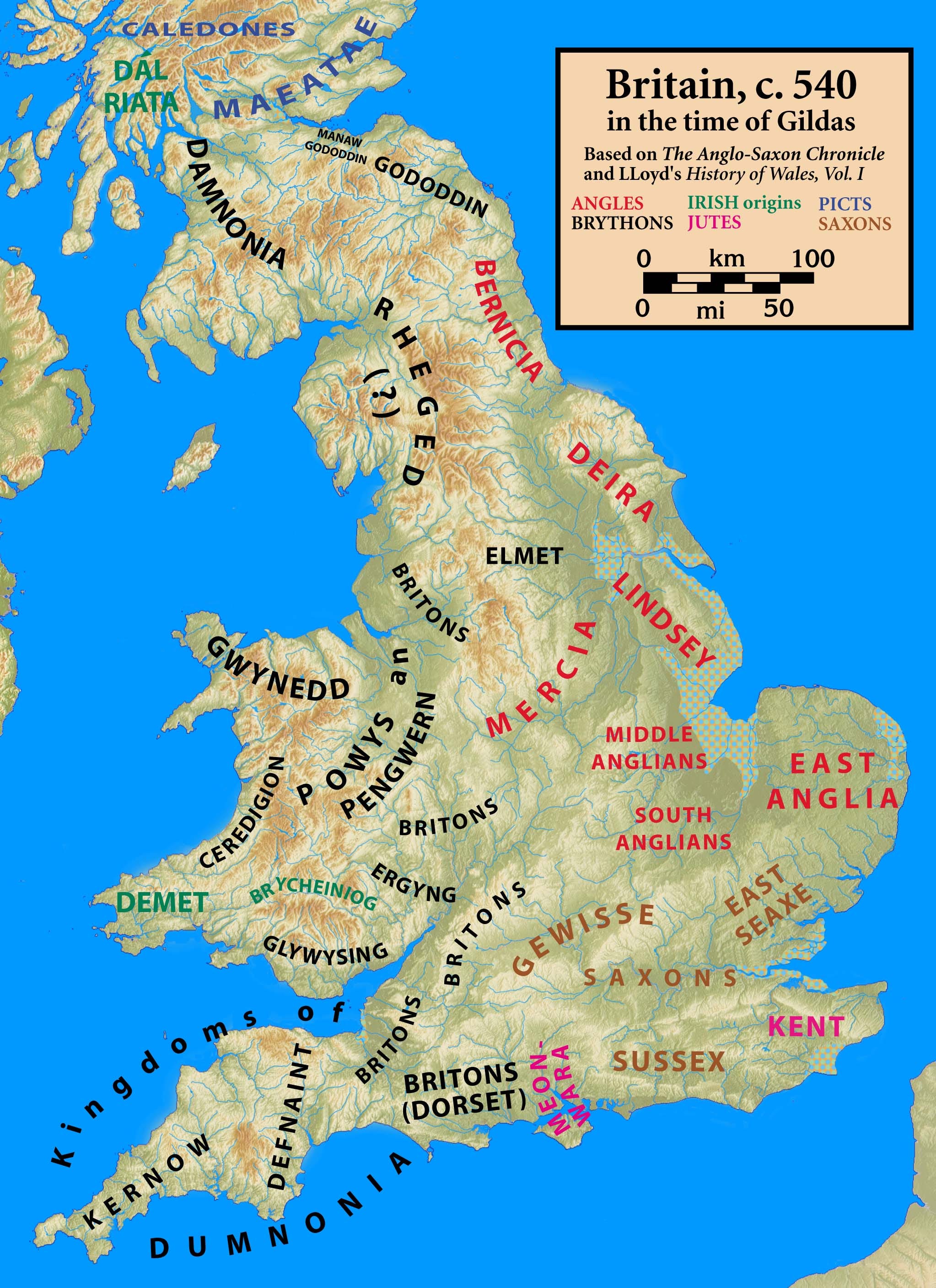
Speaking of rulers, there were plenty. After the Romans left, the former province fractured into areas ruled by local warlords and petty kingdoms. Their kings Gildas called tyrants, tyrannus in Latin. This could be a corruption of the word tigernos found in Welsh and Breton sources which means simply ’lord’. In the writings of 5th and 6th century Britain, dynastic kings, imperial usurpers and even city magistrates were called ’tryants’. Since tigernos and tyrannus sound so similar, Gildas could easily have taken the word and used it as a jab at rulers he disliked.
Kings and warlords of these new domains fought with each other. However, if you had a time machine you wouldn’t have seen knights dressed in plate armour riding armoured horses or clashes of grand armies. Instead you would most likely have seen smaller troops with warriors wearing light chain mail or scale armour. The horses they rode to battle with were unarmoured. Warriors riding horses would throw spears or javelins at their enemies which hints at a continuation of Roman traditions to some degree. Battles were often local skirmishes or raids. Gildas paints a picture of brutal subjugation of Britain by the Saxons and retreat of Britons to the west, but archaeologists haven’t found mass graves or evidence of genocide. Relationship between Britons and Saxons was more complicated and they would occasionally make alliances, especially in the 7th century. Anglo-Saxon laws gave Britons of the areas they ruled a lower position in society though.

The kingship of Britain during the Arthurian age was peripatetic. Rulers would occasionally move their whole courts instead of ruling from one permanent capital city. Old Roman towns lost their political importance and were unable to provide work for the inhabitants. They were also difficult to defend against raids, so they gradually declined. People moved back to the countryside to earn their livelihood from agriculture. Roman stone buildings such as villas were left to crumble, or their stones were repurposed. The granaries of Vindolanda fort were turned into residential buildings. Roman stones were used, for example, in building churches and defensive structures. Elites reoccupied Iron Age hillforts, fortified settlements built on hilltops, which were easier to defend than towns. They also acted as reminders of the might of their rulers. Two powerful hillforts of their time were South Cadbury, famous for its gigantic ramparts, and Tintagel, which later became known as the fabled birthplace of King Arthur. South Cadbury was a massive hillfort standing 500 feet above the plains of Somerset. It housed a giant, rectangular feasting hall, was part of an active trading network and very likely belonged to a mighty Briton ruler, warlord or king. Tintagel was a flourishing settlement and center of trade. Its inhabitants traded with the Mediterranean world, importing wine, olive oil and fine pottery. It was most likely one of the peripatetic courts of Dumnonian kings.
These examples show us that while Britain went through profound changes after the Romans left, the Arthurian age can be called the Dark Ages only when it comes to the number of written or material sources from the time period. I hope this post has shed light on the myths surrounding Arthurian Britain and dispersed the fog of war from the map of the Dark Ages. Stay tuned for more!
Until then,
Piia
Further reading:
Geoffrey of Monmouth (c. 1135-1139): Historia Regum Britanniae, The History of the Kings of Britain.
Sir Thomas Malory (1485): Le Morte d’Arthur.
Christopher Snyder (1998): An Age of Tyrants: Britain and the Britons, A.D. 400-600.
Elizabeth Archibald (ed.) & Ad Putter (ed.) (2009): The Cambridge Companion to Arthurian Legend.
Guy Halsall (2013): Worlds of Arthur: Facts and Fictions of the Dark Ages.
Mark Williams (2021): The Celtic Myths That Shape The Way We Think.
"South Cadbury, famous for..." you missed a great opportunity here!
Great article as always. I find it interesting how legends and myths can become so universally entrenched and known even from such an early time, and all the while we still have no evidence that such a person, Arthur, ever even existed. And it's not just Arthur, but there are schools of thought that other historical figures, William Wallace being one that immediately springs to mind, either never existed, or were combined composite historical figures, absorbing the lives of many other people to create their mythical, historically-agreed-upon version. As always, these subjects make one realise that we actually know extremely little about the reality of our shared past, even with a plethora of surviving literature and archaeological findings. The illusion is so much easier to cling to.