
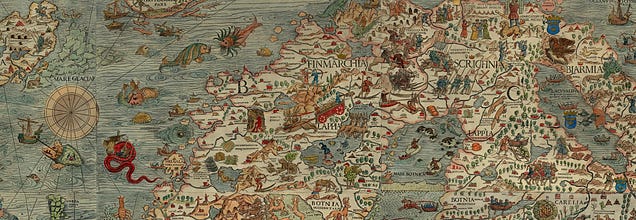

”Finland, the northernmost land, together with Lappland, was once during pagan times as learned in witchcraft as if it had had Zoroaster the Persian for its instructor in this damnable science...Among the Bothnian people of the North wizards and magicians were found everywhere, as if it were their particular home. By their immense skill in deceiving the eye they knew well how to disguise their own and other persons’ countenances with different appearances...Not only champion fighters but women and delicate virgins...”
- Olaus Magnus (1555): A Description of Northern Peoples, Book 3 chapters 16-17.
Thus wrote Olaus Magnus (1490–1557), the Swedish Catholic priest and cartographer of Carta Marina I introduced in earlier posts, about Peräpohjola, the region that includes my home area, the Tornio river valley. When writing about ancient Finnish folk magic and traditions, it is also important to introduce the people who practised it: tietäjät. A tietäjä was a specialist in magic and folk religion during a time when the majority of Finns made their living from agriculture. A tietäjä had to be lujaverinen (strong-blooded). It meant that they had to have more of their own väki than regular people. They also had to be fearless and able to face the unpredictable forces of the otherworld.
Väki is a central, multilayered term in Finnish folk religion. It doesn’t translate well into English since there is no equal term in the language. In some respects väki resembles the Polynesian term mana. Väki refers to an impersonal, neutral yet unpredictable and dangerous force. On the other hand, it also means a host of beings from beyond. It was believed that different elements and phenomena, such as water, forest and iron, had väki. Kalman väki (the väki of death), also known as church-väki, was an impersonal mass of the deceased who had lost their persona. It reeked of rotten fish or burnt wool. Väki was the force which made magic work. A tietäjä stored väki in their witch pouch and controlled it. Inside the witch pouch could be, for example, graveyard soil or parts of a snake.
Besides having a lot of personal väki, a tietäjä had their own ritual equipment and, most importantly, knowledge. Back in the day, magic was used freely in everyday life. However, a tietäjä knew more spells and used them more skilfully than regular people. The most important knowledge was synty, or mythic origin of things. The Finnish folk belief held that one who knew the origin of something, such as a disease or a snake, could control it. The word tietäjä itself is strongly tied to the Finnish word for knowledge, tieto. The exact English translation of tietäjä would be ’knower’, a person who knows. As is the case with väki, tietäjä has no equivalent term in English either.
A tietäjä is not a shaman, but the origins of the tietäjä institution possibly lie in shamanism. The institution most likely developed already during the Iron Age, which started in Finland around 500 BCE and ended around the 13th or 14th century. The tietäjä institution was active for hundreds of years. It was still flourishing in the 19th century, but waned by the 20th century. However, Pekka Huovinen (d. 1961) and a few other tietäjät were still practising their profession in the 1950s.
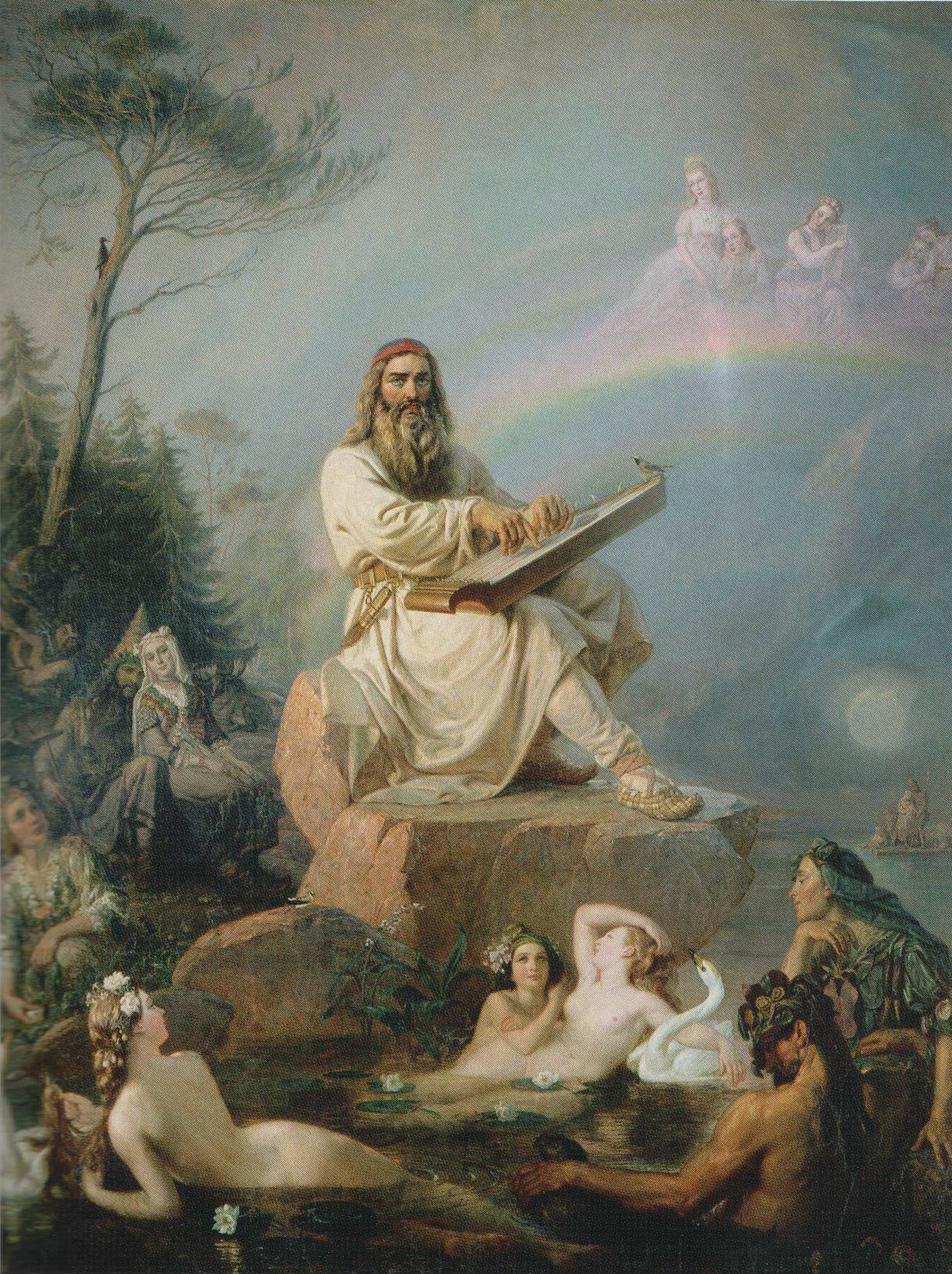
For many practising the profession, being a tietäjä was a side job. Their main occupations were often farming or craftwork. Tietäjät were important members of their society, but attitudes towards them were sometimes ambivalent. On one hand they were respected and valued, but on the other their skills were feared. People often approached tietäjät for help and bought services from them. A tietäjä did many jobs. The most important task was healing the sick. They also investigated thefts and searched for lost items. A tietäjä could find the thief by sending church väki after them with spells. According to folk tradition, the best day to do this was Sunday, which was a holy day.
Among the jobs of a tietäjä was ensuring good fortune. They protected livestock from predators and diseases. A tietäjä also secured hunting luck, a bountiful harvest and protected travellers. Moreover, community members approached a tietäjä when they had problems in love. A tietäjä could make an unwanted suitor lose interest or ignite love in an indifferent heart.
Tietäjät were believed to possess a multitude of skills. For example, it was thought that they were able to stop bleeding with nothing but the power of thought. Tietäjät were also capable of calling the deceased to assist them. Angering a tietäjä was dangerous business: while they could help those in need, they were also able to hurt their enemies, including their property or livestock.
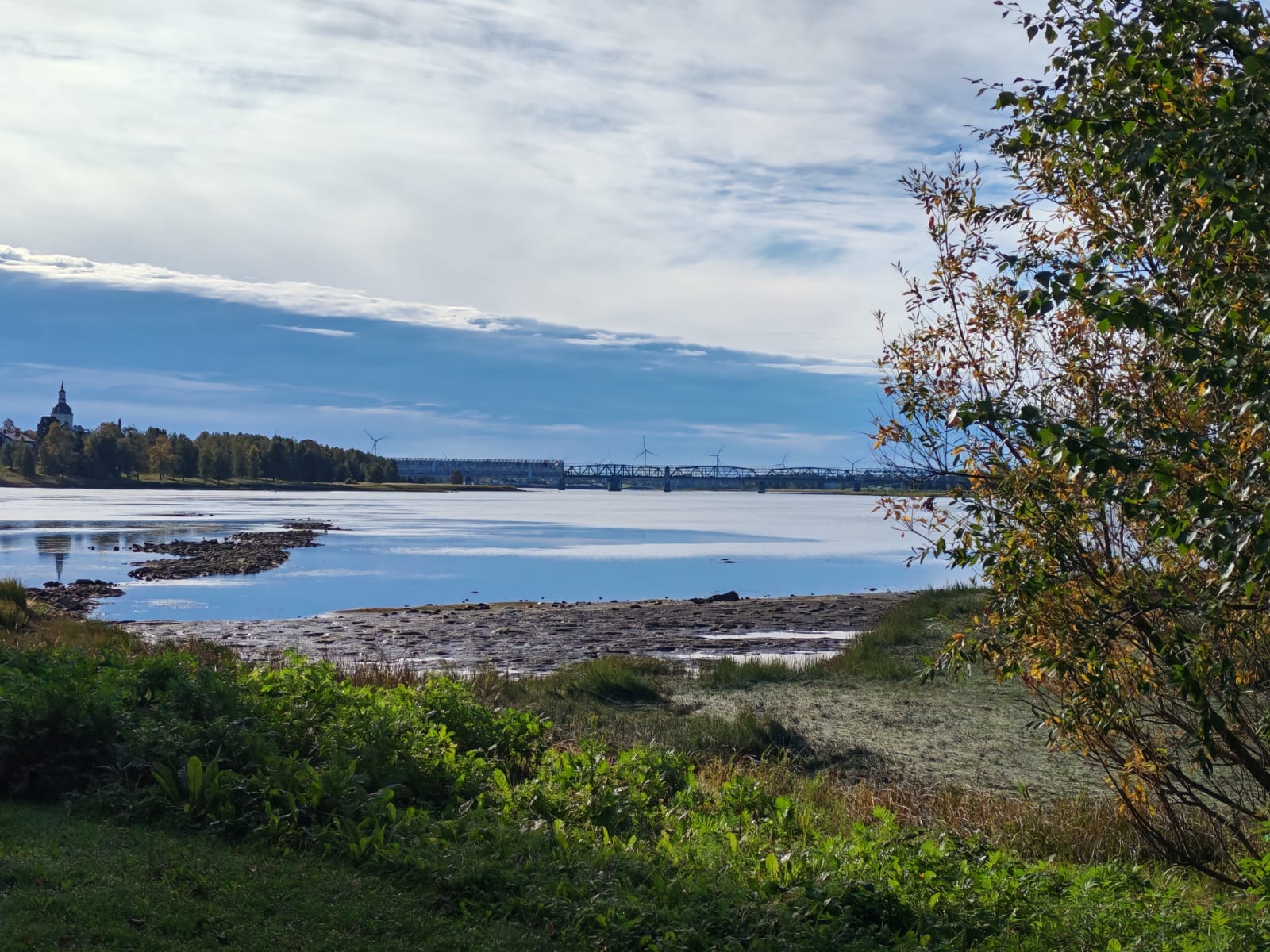
Lastly, a few words about the tietäjät of Peräpohjola. After all, it was almost like their homeland, as Olaus Magnus put it. The tietäjä institution has a long tradition in Peräpohjola and my hometown of Tornio. These areas were renowned for several specialised healers. Among them were blood stoppers, who were capable of stopping bleeding just with the power of thought or word. According to stories, they were able to do it even from afar. In a Tornio village called Raumo, Kaisa-Maija healed rashes. Nakkulan Maija’s speciality was healing erysipelas.
Along with healers, Peräpohjola and Tornio had seers too. Seers were people who could receive messages from the dead. They could also find thieves by looking into strong alcohol, using it as a scrying medium. The famous seers Korven Arviiti and Vähäjärven Pekka were thought to be able to see the väki of death and smell death near houses where someone was going to pass away.
Some tietäjät were so legendary that people told stories about them decades after they had passed away. One especially renowned tietäjä was Iisakki Pistokoski (1841–1902), a farmer and healer from Tornio who cured people of different ailments. He owned a steam cabinet, which he used to treat conditions such as rheumatism. I remember hearing stories about Pistokoski as a small child. According to one particular legend, he rode through the Church of Alatornio with his sledge one autumn night. Stories said that the church doors always opened to him without keys. And when the doors swung open, he flew through the church in his sledge. This sledge still exists today and is housed in the Museum of Torne Valley.
I hope you enjoyed this dive into Finnish tietäjä traditions.
See you again in the Map Room!
Until then,
Piia
Further reading:
Martti Haavio (1967/2019): Suomalainen mytologia. (In Finnish)
Matti Kuusi, Keith Bosley, Michael Branch (edit). (1977): Finnish Folk Poetry – Epic. An Anthology in Finnish and English.
Anna-Leena Siikala (1992): Suomalainen šamanismi - mielikuvien historiaa (In Finnish)
Virpi Toratti (1998): Se oli niin noitasta aikaa – kansanuskosta ja magian käytöstä Tornion seudulla 1800-luvulla. In Tornionlaakson vuosikirja 1998, pp. 159–196. (In Finnish)
Anna-Leena Siikala (2002): Mythic Images and Shamanism - A Perspective on Kalevala Poetry.
Laura Stark (2006): The Magical Self - Body, Society and the Supernatural in Early Modern Rural Finland.